
Buyer's Guide
Top Aluminum Extrusion Suppliers for Low and Mid Volume Custom Profiles
A buyer's guide to sourcing custom aluminum profiles at low and mid volumes: what the volume tiers mean, what separates suppliers who serve this segment, die costs, lead times and how to prepare your RFQ.
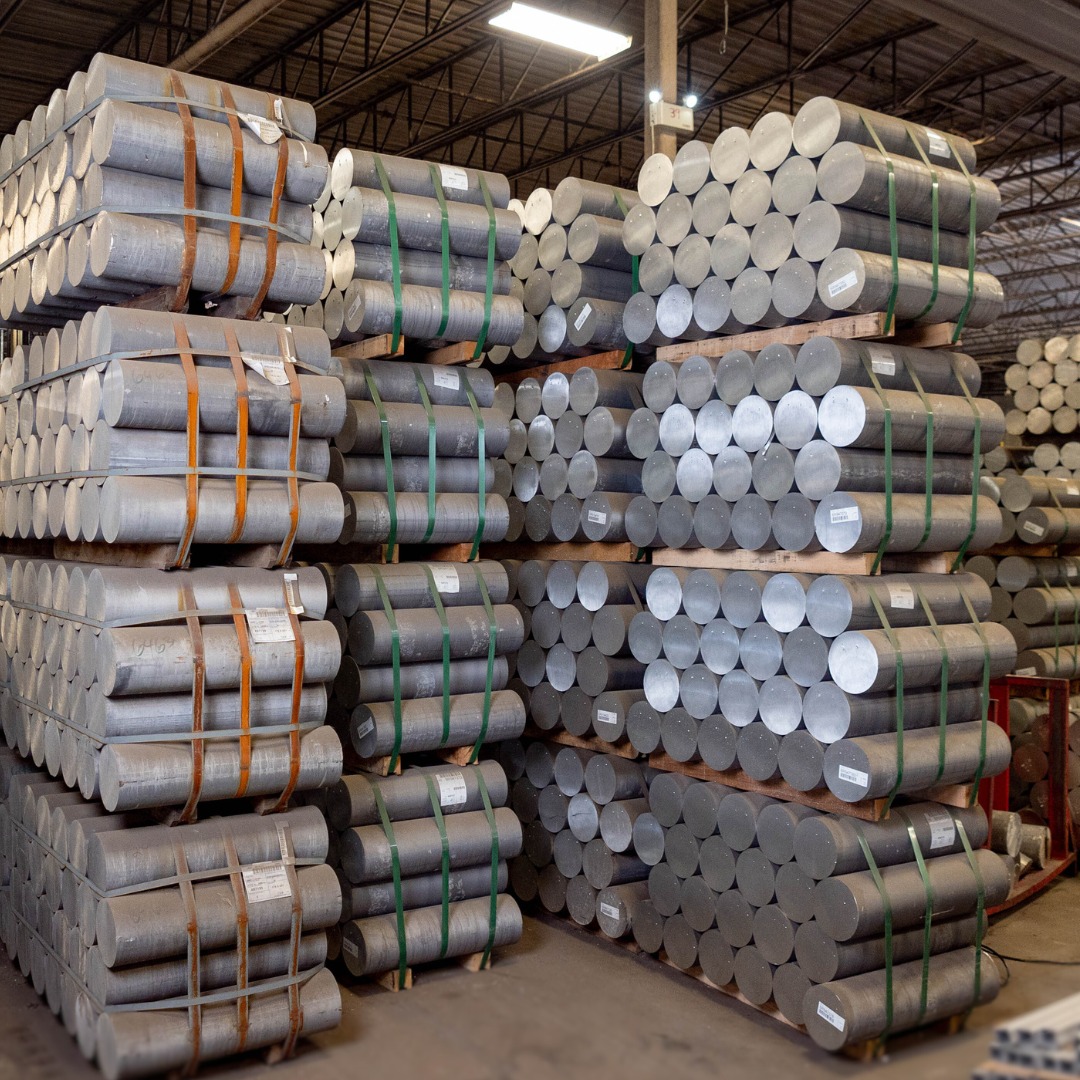
Finding a reliable aluminum extrusion supplier is straightforward when you're ordering 50,000 lbs a year. Every major extruder will take your call. The harder problem is when your program is newer, your volumes are still building, or you need a custom profile without committing to a massive production run upfront. Most large extruders simply aren't set up for that reality.
This guide is written for engineers, procurement managers, and product developers who need custom aluminum profiles at low to mid volumes. It covers what those volume tiers actually mean, what separates suppliers who genuinely serve this segment from those who don't, and which North American suppliers are worth evaluating.
What “Low Volume” and “Mid Volume” Actually Mean
Volume definitions vary by supplier, but the industry generally breaks down as follows:
| Volume tier | Typical run size | Common use case |
|---|---|---|
| Prototype / sampling | 1 to 100 pieces | Design validation, first articles |
| Low volume | 100 to 5,000 pieces | New product launches, specialty programs |
| Mid volume | 5,000 to 50,000 pieces | Established programs scaling up |
| High volume | 50,000+ pieces | Mass production, commodity profiles |
According to the Aluminum Extruders Council, most extruders have a minimum order threshold of 1,000 to 2,000 lbs per shape. For a lightweight 6063 profile, that might translate to several hundred pieces. For a heavier structural section, it could mean far fewer. Understanding this conversion is critical before you start quoting.
The real challenge at low volume isn't the extrusion itself. It's the die cost amortization. A custom die typically runs between $500 and $2,500 depending on complexity. Spread across 200 pieces, that's a meaningful per-unit cost. Spread across 5,000 pieces, it's negligible. Suppliers who serve this segment well know how to structure tooling costs to make smaller runs viable.
What to Look for in a Low and Mid Volume Extrusion Supplier
Not every extruder is built for flexibility. Large commodity producers optimize for throughput, which means custom low-volume work gets deprioritized or priced out. When evaluating suppliers for this segment, the following criteria separate the right partners from the wrong ones.
In-House Die Design and Tooling
Suppliers who design and maintain dies internally have a fundamental advantage for custom profiles. They can iterate faster, own the tooling relationship, and make corrections without involving a third party. If a die needs modification after first article review, an in-house toolmaker resolves it in days rather than weeks.
Ask directly: who owns the die, and who maintains it? If the answer involves an outside toolmaker, factor that into your lead time expectations.
Multiple Press Sizes
A supplier operating multiple presses across different tonnages can match your profile geometry to the right press size. Smaller presses use smaller billets and less expensive tooling, which directly reduces the cost floor for low-volume runs. A shop with only one large press has limited flexibility for smaller, less complex profiles.
Value-Added Services Under One Roof
For low and mid volume programs, managing multiple vendors is a real cost. Every handoff adds lead time, freight, and coordination risk. Suppliers who offer extrusion, machining, fabrication, and finishing as integrated services deliver meaningful advantages:
- Fewer purchase orders to manage
- Single point of accountability for quality
- Shorter total lead times
- Better profile-to-finish consistency
Willingness to Engage Early in the Design Phase
The best low-volume suppliers don't just quote what you send them. They review your profile drawing for manufacturability and flag issues before a die is cut. Small geometry changes, like adjusting wall thickness uniformity or eliminating a tight internal radius, can meaningfully reduce die cost and improve extrusion quality. A supplier who offers this kind of design support upfront is worth more than a cheaper quote from one who doesn't.
Transparent MOQ and Pricing Structure
Some suppliers set pound-based minimums (commonly 1,000 to 2,000 lbs per shape). Others charge a minimum run fee instead. Neither model is inherently better, but you need to understand which applies before comparing quotes. A supplier with a $500 minimum run fee may be more cost-effective for a 300-piece order than one with a 1,000 lb minimum and no fee alternative.
Top Suppliers for Low and Mid Volume Custom Aluminum Extrusions
The suppliers below are evaluated specifically for their suitability for low to mid volume custom profile work in North America. Criteria include press range, secondary capabilities, design support, and flexibility for smaller programs.
Dajcor Aluminum (Chatham, ON and Chavies, KY)
Dajcor is a Canadian-based manufacturer with facilities in Ontario and Kentucky, serving manufacturers across North America. For low and mid volume custom work, Dajcor offers a combination of capabilities that is difficult to match from a single source:
- Four extrusion presses (7″, 8″, and two 9″ presses) covering profiles up to 11″ circumscribed circle diameter
- Custom profiles in 6000-series alloys including 6063, 6061, 6082, 6005, and 6463
- In-house die development and tooling
- Integrated machining, fabrication, and an automated anodizing line
- Design support from prototype through production scaling
What makes Dajcor particularly well-suited for this segment is the combination of press range and integrated downstream services. A program that starts at a few hundred pieces for design validation can scale through the same supplier without re-qualifying a new vendor. The automated anodizing line handles surface finishing in-house, eliminating a common handoff point that adds weeks to lead times.
Dajcor's custom aluminum extrusion capabilities span solid, hollow, semi-hollow, and complex multi-hollow profiles, including thin-wall and high-cosmetic-surface requirements.
Best for: Automotive and EV, industrial automation, medical, architectural, and renewable energy programs requiring complex profiles with downstream machining and finishing.
Thomasnet-Listed Ontario Suppliers
For buyers sourcing within Ontario specifically, Thomasnet's Ontario custom aluminum extrusion directory lists a range of manufacturers with varying capabilities. When using this resource, filter for suppliers who explicitly state low-to-medium volume production and secondary operations. Many listed suppliers focus on specific end markets (lighting, architectural, medical) so matching industry experience matters as much as raw capacity.
IQS Directory: North American Extrusion Suppliers
IQS Directory provides a searchable database of aluminum extrusion manufacturers across North America with capability filters including custom profiles, anodizing, and CNC machining. It is a useful starting point for building a shortlist, though capability claims should always be verified directly with the supplier before issuing an RFQ.
Considerations for U.S.-Based Programs
For programs based in the United States, the supplier landscape is broader but the same selection criteria apply. Press range, die ownership, and integrated services remain the key differentiators for low and mid volume work. Buyers sourcing across the border should also factor in lead time variability, cross-border logistics, and currency exposure when comparing Canadian and U.S. suppliers.
How to Prepare Your RFQ for a Custom Profile
A well-prepared RFQ gets faster, more accurate quotes and signals to suppliers that you're a serious buyer. Suppliers who receive incomplete RFQs often either decline to quote or pad their pricing to account for unknowns.
- Prepare the cross-section drawingA 2D cross-section with critical dimensions, wall thicknesses and tolerances marked.
- Include a 3D modelA STEP-format model where available, alongside the 2D drawing.
- State the circumscribed circle diameterThe smallest circle that contains the full profile cross-section — this determines which press can run the profile.
- Specify alloy and temperName the alloy and temper requirement, or describe the application if you need a recommendation.
- Give the full volume pictureImmediate order quantity and anticipated annual volume, plus whether this is a one-time project or an ongoing program.
- Set the scheduleTarget delivery date and any hard deadlines.
- Define finishing and secondary operationsSurface finish requirements (mill finish, anodizing class, powder coat specification), any CNC machining, drilling, cutting to length or assembly requirements, and cosmetic surface standards.
Providing your 12–24 month volume picture matters more than most buyers realize. A 500-piece initial order looks very different to a supplier if it's the first of four quarterly runs versus a one-time prototype. Suppliers can offer better tooling economics when they understand the full demand picture.
Not all extruders offer secondary operations in-house. If your profile requires machining or anodizing, clarify this upfront. A supplier who outsources these steps will have longer lead times and less control over the finished part quality.
Cost Factors Unique to Low Volume Custom Extrusions
Low and mid volume programs carry cost dynamics that don't apply at scale. Understanding them helps you evaluate quotes more accurately and avoid surprises.
Die Cost and Amortization
Every custom profile requires a dedicated die. Die costs vary based on profile complexity, the number of voids (solid vs. semi-hollow vs. hollow), and whether the die is designed for a smaller or larger press. A straightforward solid profile die might cost $700 to $1,200. A complex multi-hollow profile can run $2,000 or more. At low volumes, this is your most significant variable cost.
Some suppliers amortize the die cost into unit pricing; others charge it as a separate line item. Both approaches are legitimate, but the separate line item approach gives you more transparency when comparing quotes.
Minimum Run Fees vs. Pound-Based Minimums
As noted earlier, suppliers use different models:
| Model | How it works | Better for |
|---|---|---|
| Pound-based minimum | You must order at least X lbs per run | Heavier profiles where X lbs equals a reasonable piece count |
| Minimum run fee | Flat charge regardless of quantity | Light profiles where pound minimums would be excessive |
| No minimum | Priced per piece at any quantity | Prototype specialists (typically higher per-unit cost) |
Alloy and Temper Selection
Alloy choice affects both cost and lead time. 6063-T5 is the most common architectural alloy, widely stocked and easy to source. 6061-T6 offers higher strength but is less forgiving in complex geometries and may require longer lead times. If your application allows flexibility, discussing alloy selection with your supplier during the design phase can reduce cost and improve lead time.
Lead Time Expectations
Custom extrusion lead times for low volume runs typically fall in the following ranges:
- Die development and first article: 3 to 6 weeks
- Production run after die approval: 2 to 4 weeks
- With integrated machining and finishing: add 1 to 3 weeks
Planning for 6 to 10 weeks total from RFQ to finished parts is a reasonable baseline for a new custom profile. Suppliers with in-house die making and secondary operations sit at the shorter end of that range; those who outsource tooling or finishing will be at the longer end.
Choosing the Right Supplier for Your Program
The right supplier for a 200-piece prototype run is not necessarily the right supplier for a 10,000-piece annual program, and vice versa. Before issuing your RFQ, match your program requirements to supplier strengths using these criteria:
- If your volume is under 500 pieces: prioritize suppliers with minimum run fees (not pound-based minimums) and in-house die making. Ask explicitly about prototype tooling options.
- If your volume is 500 to 5,000 pieces: focus on integrated capabilities. You want extrusion, machining, and finishing under one roof to control lead time and quality.
- If your volume is 5,000 to 50,000 pieces: press range and capacity matter more. Confirm the supplier can scale with your program and has the press tonnage for your profile geometry.
- If your profile is geometrically complex: prioritize suppliers with multi-hollow and asymmetrical profile experience, and ask for examples of similar work they've produced.
The suppliers who serve this segment best are not the largest extruders in North America. They are mid-sized manufacturers with the technical depth to handle complex custom work and the operational flexibility to serve programs that haven't yet reached high-volume scale.
Frequently asked questions
Low volume generally means 100 to 5,000 pieces. Prototype and sampling runs are 1 to 100 pieces, mid volume runs 5,000 to 50,000 pieces, and high volume is anything above 50,000.
Definitions vary by supplier, so confirm how a given extruder tiers its work before comparing quotes.
According to the Aluminum Extruders Council, most extruders have a minimum order threshold of 1,000 to 2,000 lbs per shape.
For a lightweight 6063 profile that might translate to several hundred pieces; for a heavier structural section it could mean far fewer. Some suppliers charge a minimum run fee instead of a pound-based minimum, which can be more economical for light profiles at small quantities.
A custom die typically runs between $500 and $2,500 depending on complexity.
A straightforward solid profile die might cost $700 to $1,200, while a complex multi-hollow profile can run $2,000 or more. Cost depends on profile complexity, the number of voids, and whether the die is designed for a smaller or larger press.
Plan for 6 to 10 weeks total from RFQ to finished parts for a new custom profile.
Die development and first article typically take 3 to 6 weeks, the production run after die approval takes 2 to 4 weeks, and integrated machining and finishing adds 1 to 3 weeks. Suppliers with in-house die making and secondary operations sit at the shorter end of that range.
Usually not. Custom extrusion MOQs from overseas manufacturers typically start at 500 to 2,000 kg per profile, with lead times of 8 to 16 weeks including shipping.
For low-volume North American programs, the economics rarely favour offshore sourcing once tooling, freight, duties, and quality risk are included in the total cost calculation.
A supplier operating multiple presses across different tonnages can match your profile geometry to the right press size.
Smaller presses use smaller billets and less expensive tooling, which directly reduces the cost floor for low-volume runs. A shop with only one large press has limited flexibility for smaller, less complex profiles.
Related to this article
Where this comes up across our capabilities and the markets we serve.