
Design Support
Engineering & design support built for performance, manufacturability & cost efficiency
Design Support
At Dajcor Aluminum, design support is where strong ideas become manufacturable, cost-effective solutions.
We work closely with your engineering and product development teams to optimize aluminum profiles for extrusion, machining, fabrication, and finishing. From early-stage concepts to production-ready designs, our goal is to ensure your part performs as intended—while reducing complexity, cost, and lead time.
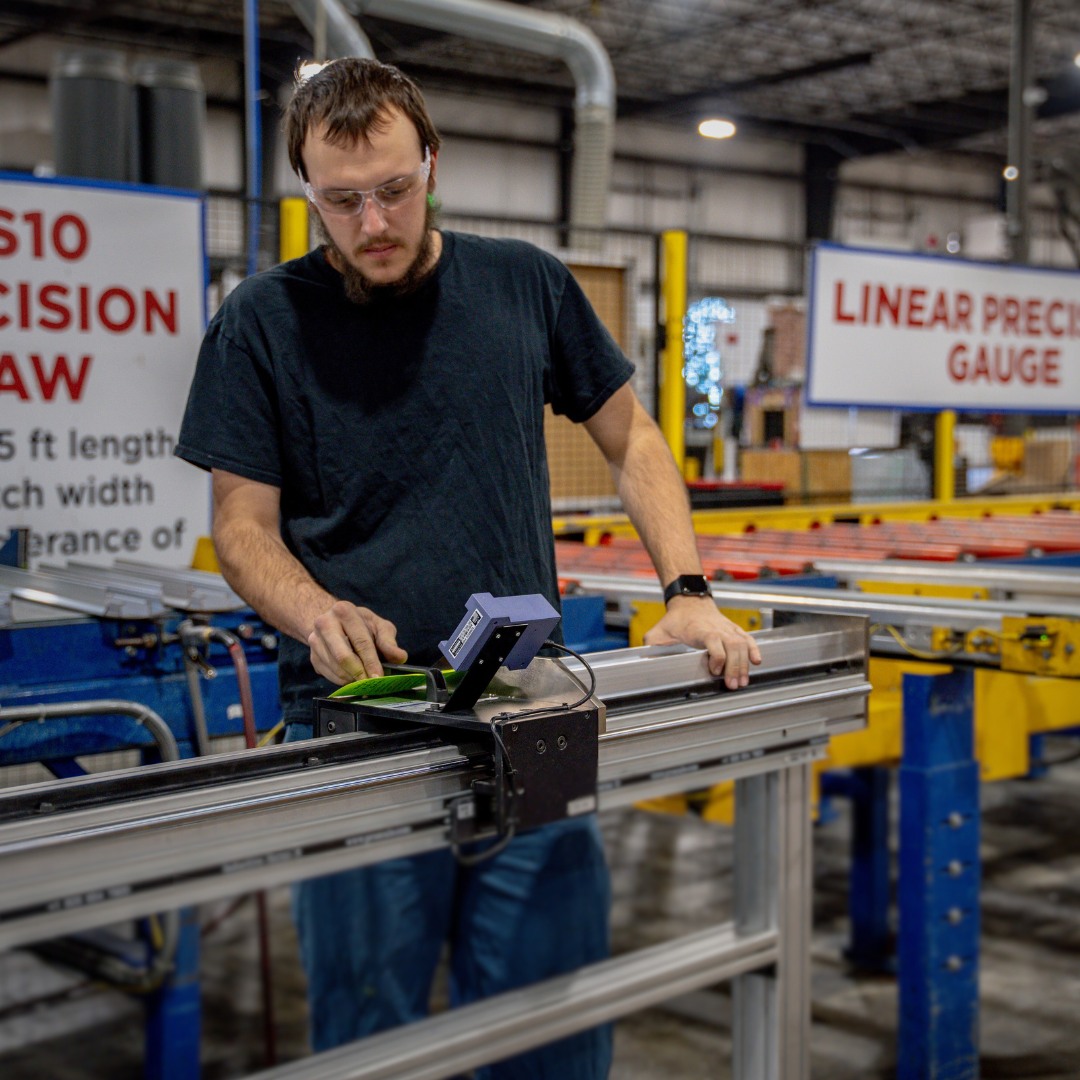
Because extrusion, machining, fabrication and finishing all happen under our own roofs, a design decision made early can be tested against every downstream process before a die is ever cut. That is usually where the cost comes out of a part.
What We Support
- New product and profile development
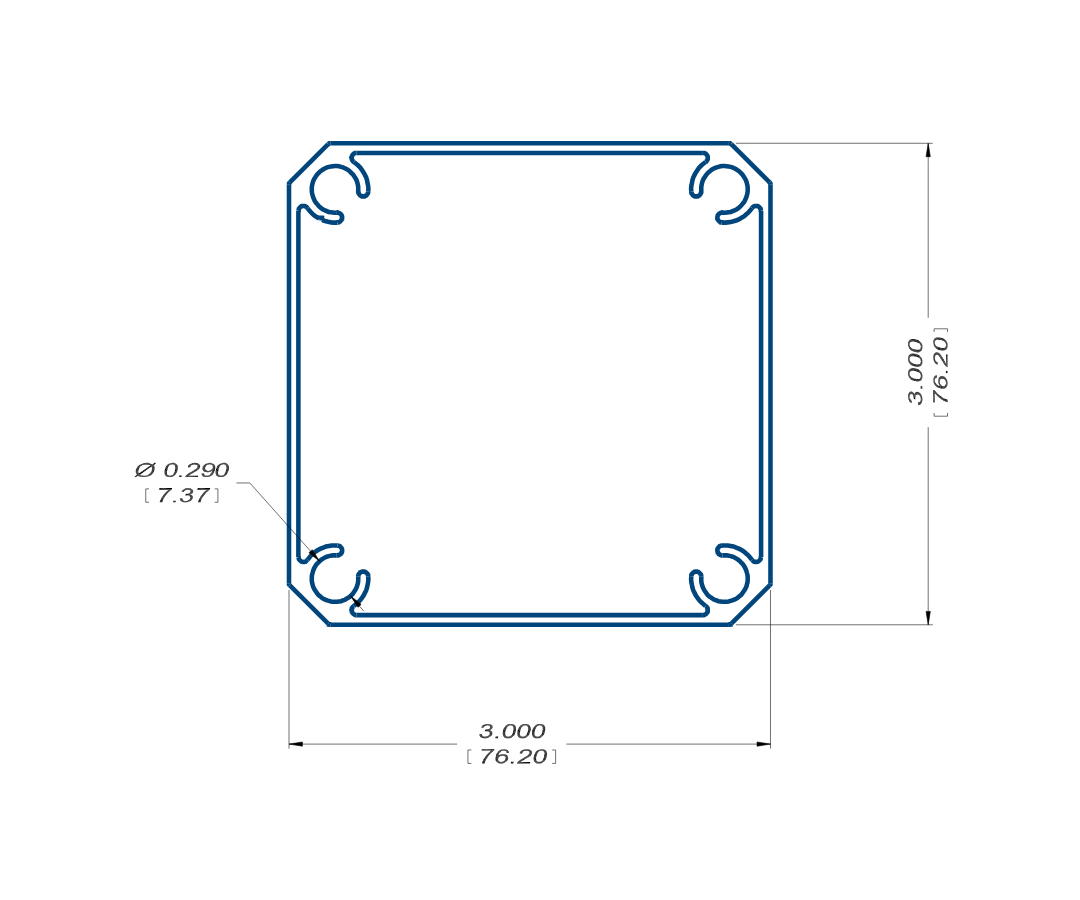
- Design optimization for aluminum extrusion
- Conversion from steel, plastic, or multi-part assemblies
- Cost-reduction and value engineering initiatives
- Profiles designed for machining, fabrication, and finishing
- High-performance and structural applications
- Cosmetic and high-visual surface requirements
- Integrated, multi-feature extrusion designs
What a design review covers
Most engagements begin with a drawing, a CAD file or a sketch, and a target. We work through the same set of questions on each one.
- Extrusion feasibility
- Whether the section can be produced as drawn, and what has to change if it cannot.
- Wall thickness and balance
- Even wall transitions and symmetry, which govern dimensional consistency and surface quality.
- Tolerance strategy
- Which dimensions genuinely need to be held tight, and which can open up to reduce cost.
- Alloy and temper selection
- Matching a 6000-series alloy to the strength, finish and fabrication the part requires.
- Die design and development
- Tooling approach, expected sampling cycles and the path to a repeatable profile.
- Downstream compatibility
- How the profile will be machined, fabricated, anodized or painted after extrusion.
Performance features
What the process is designed to deliver, and why it matters downstream.
Where We Add Value
We don’t just review your design—we improve it.
Our team works with you to:
- Simplify complex assemblies into single extrusions
- Reduce part count and assembly time
- Improve structural performance while minimizing weight
- Ensure compatibility with finishing and cosmetic requirements
- Accelerate time from concept to production
Why Dajcor
Dajcor has run as a one-stop, dual-source supplier since 2010, with plants in Chatham, Ontario and Chavies, Kentucky. Removing subcontractors from the chain is what shortens lead times and keeps handling marks and freight costs down.
- Collaborative engineering approach
- Deep expertise in aluminum extrusion design
- Integrated support across all in-house capabilities
- Faster development cycles and reduced revisions
- Reliable North American manufacturing
From Concept to Production
How a project moves from first conversation to delivered parts.
- Initial concept review and consultation
- We review the concept, the application and the targets that matter — load, weight, finish, volume and timing.
- Profile design and feasibility analysis
- The profile is drawn up and checked for extrudability, with wall thickness, tolerances and alloy resolved together.
- Die development and sampling
- Tooling is designed and built, then sampled so the section can be measured against the drawing.
- Prototype evaluation and refinement
- Samples go into your own evaluation, and the profile is refined against what that testing shows.
- Production readiness and scaling
- The design is released to production, with machining, fabrication and finishing sequenced behind it.
Ideal Applications
This capability shows up across every market we serve. A few of the most common:
Also suited to
- Architectural & building systems
- Automotive & EV
- Industrial automation
- Defence & infrastructure
- Marine & recreational
- Medical and cleanroom systems
Common questions
Answers to the questions that come up most often at the quoting stage.
In many applications, aluminum extrusions can successfully replace steel components while offering several advantages.
Aluminum provides an excellent strength-to-weight ratio, meaning it can deliver structural performance while significantly reducing overall weight. This can improve efficiency in applications such as automotive, transportation, industrial equipment, and infrastructure systems.
Extrusion also allows engineers to integrate multiple design features—such as ribs, channels, and hollow sections—into a single profile. This can reduce part counts, simplify assembly, and lower overall manufacturing costs.
When evaluating a steel-to-aluminum conversion, factors such as load requirements, corrosion resistance, finishing needs, and fabrication processes should be considered. Our team works with customers during the design stage to help determine whether an aluminum extrusion is a suitable alternative for their application.
To ensure an accurate quotation and efficient project evaluation, it is important to provide detailed information when submitting an aluminum extrusion RFQ.
Typical information includes:
- Profile drawings or CAD files showing the extrusion cross-section
- Circumscribing Circle Diameter (CCD) or overall profile dimensions
- Aluminum alloy requirements (such as 6061, 6063, etc.)
- Surface finishing requirements (anodizing, powder coating, mill finish, etc.)
- Fabrication or secondary operations such as machining, cutting, drilling, or assembly
- Estimated annual production volumes
- Target project timeline or production start date
Providing this information allows our team to evaluate tooling requirements, confirm manufacturability, and develop accurate pricing and lead times.
Early collaboration during the quoting stage also helps identify opportunities to optimize the extrusion design for manufacturing efficiency, cost reduction, and long-term production success.
Minimum order quantities for aluminum extrusions depend on several factors, including the profile design, alloy selection, and the weight of the extrusion profile.
Depending on the profile size and weight, production may be scheduled on one of our extrusion presses. For many profiles, typical minimum order quantities range from approximately 500 kg to 1,000 kg.
During the quoting stage, our team reviews each project to determine the most efficient production quantities based on the specific requirements of the application.
Looking to develop a new aluminum profile or improve an existing design?
Let’s work together to create a solution that performs, reduces cost, and scales with your production needs.
Request a QuoteOther services we offer
Your Industry. Our Capability. One partner for extrusion, machining, fabrication and finishing.
Machining
Precision CNC machining built for accuracy, consistency & production efficiency
Fabrication
Custom fabrication solutions built for integration, efficiency & scale
Extrusion
Manufacturing the most complex of extruded products.
Finishing
Custom finishing with our automated anodize line.