
Supplier Evaluation
Which Manufacturers Specialize in Tight-Tolerance Aluminum Machining (And How to Evaluate Them)
What tight tolerance actually means in production aluminum machining, the five dimensions to evaluate a supplier on, which Canadian manufacturers specialize in this work, and the questions to ask before awarding a program.
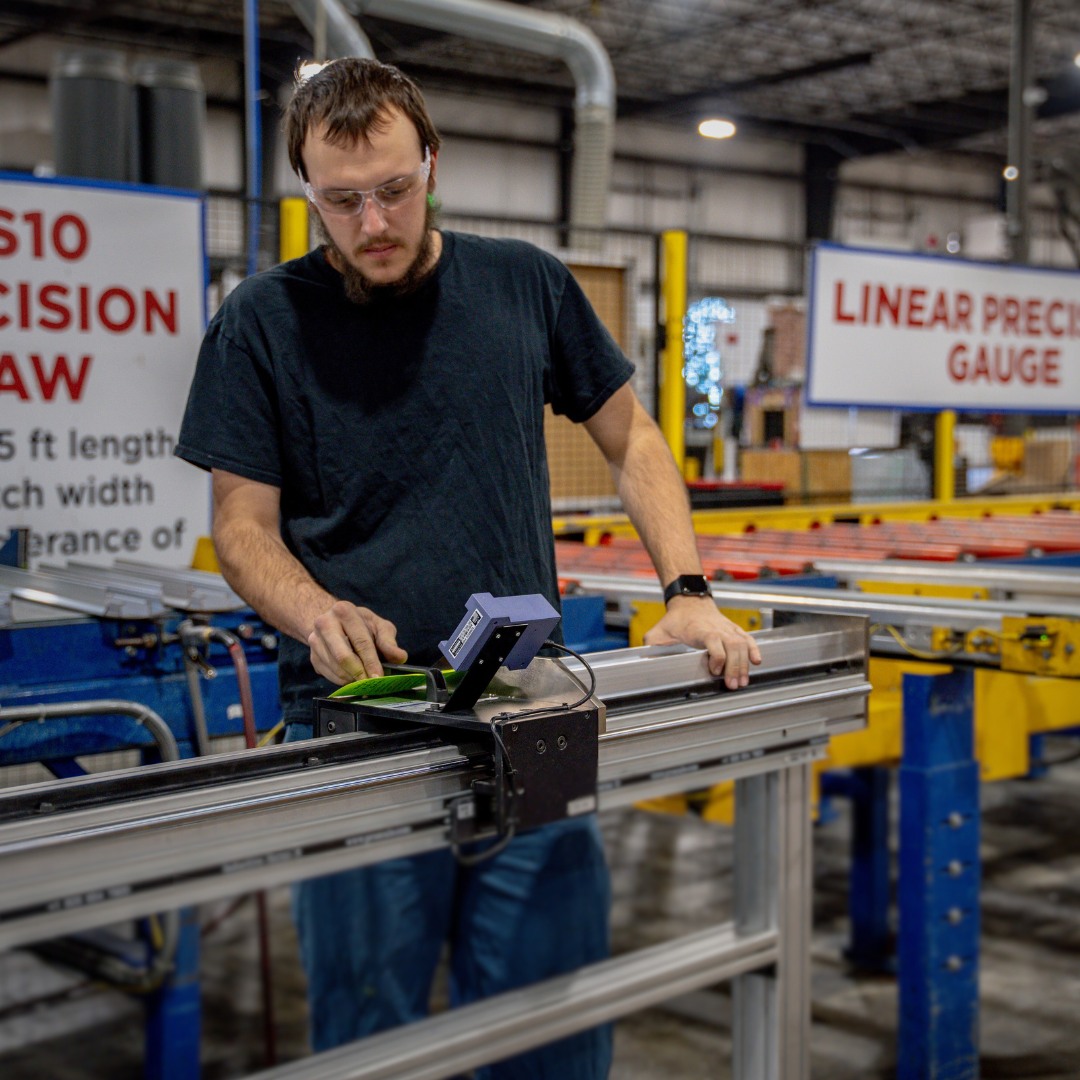
Finding a supplier who says they do tight-tolerance aluminum machining is easy. Finding one who can prove it, consistently, at production volumes, across complex geometries, is a different challenge entirely.
Canada has over 400 CNC machining companies capable of working with aluminum. The global aluminum CNC machining services market is growing at a CAGR of 7 to 9% through 2032, driven by demand for lightweight precision components in automotive, aerospace, medical, and renewable energy sectors. That growth means more suppliers, more marketing claims, and more risk for procurement teams who pick the wrong partner.
This guide breaks down what tight tolerance actually means in a production context, the criteria that separate credible suppliers from capable-sounding ones, and which Canadian manufacturers have built their operations around this kind of work.
What “Tight Tolerance” Actually Means in Aluminum Machining
The term gets used loosely. In practice, the industry defines tight-tolerance aluminum machining as holding tolerances tighter than ±0.13 mm (±0.005″) in a production environment. That's the threshold where standard machining practices stop being reliable and specialized equipment, fixturing, and metrology become non-negotiable.
Here's how tolerance tiers actually break down across the industry:
| Tolerance range | Classification | Typical application |
|---|---|---|
| ±0.13 mm (±0.005″) or looser | Standard machining | General structural components, non-critical fit |
| ±0.05 mm (±0.002″) | Precision machining | Automotive assemblies, enclosures, brackets |
| ±0.01 mm (±0.0004″) | Tight tolerance | Medical devices, aerospace structures, hydraulic components |
| ±0.005 mm (±0.0002″) or tighter | Ultra-precision | Optical housings, miniature components, critical sealing surfaces |
Achieving ±0.005 mm isn't just about running a better CNC program. It requires explicit control of equipment calibration, thermal stability in the machining environment, fixturing rigidity, cutting tool selection, and post-machining metrology. Not every shop that lists “tight tolerances” on their website has invested in all of these.
Why Aluminum Adds Complexity
Aluminum's machinability is one of its advantages, but its physical properties introduce specific challenges at tight tolerances:
- Thermal expansion: aluminum expands roughly twice as much as steel per degree of temperature change. In a shop without climate-controlled machining cells, part dimensions can shift between roughing and finishing passes.
- Springback and deformation: thin-wall aluminum parts, particularly in 7075-T6, are prone to deformation under clamping pressure. Fixturing design directly affects whether your parts hold tolerance or spring out of spec after unclamping.
- Alloy behaviour: 6061 machines predictably and is forgiving. 7075 offers higher strength but is more sensitive to tool wear and cutting parameters. 2024 and 5052 have their own characteristics. A supplier who treats all aluminum alloys the same is a red flag.
How to Evaluate a Tight-Tolerance Aluminum Machining Supplier
Most supplier evaluations stop at price and lead time. For tight-tolerance aluminum work, that's not enough. A supplier who quotes low but lacks the process controls to hold ±0.01 mm consistently will cost far more in rework, delays, and failed inspections than a higher-priced partner with a mature quality system.
Evaluate suppliers across five dimensions:
1. Technical Capability
Start with the equipment list, but go deeper than machine brand names. The questions that matter:
- What is the tightest tolerance they hold in routine production (not best-case)?
- Do they have multi-axis CNC capability for complex geometries?
- What metrology equipment do they use for in-process and final inspection (CMM, laser scanning, optical comparators)?
- Can they share recent inspection reports or first-article documentation for a similar part?
A credible supplier will answer these specifically. Vague answers about “state-of-the-art equipment” without supporting detail are a warning sign.
2. Quality System Maturity
ISO certification is the baseline, not the differentiator. Look for:
- ISO 9001:2015 certification as a minimum
- Sector-specific certifications relevant to your industry (AS9100 for aerospace, ISO 13485 for medical)
- Documented process control procedures, not just a quality manual
- Statistical process control (SPC) data for high-volume production runs
3. Alloy and Geometry Experience
Ask to see recent projects with similar alloys, wall thicknesses, and tolerance requirements to yours. A shop with 500 hours of experience on 6061 plate is not the same as one that routinely machines thin-wall 7075-T6 housings. The geometry matters as much as the material.
4. Integrated Services vs. Single-Process Shops
This is where procurement teams often underestimate total cost and risk. A shop that only machines parts requires you to manage separate suppliers for extrusion, finishing, and assembly. Each handoff adds lead time, introduces quality risk, and creates accountability gaps.
Suppliers who integrate extrusion, CNC machining, surface finishing, and assembly under one roof reduce handoffs, compress lead times, and give you a single point of accountability for the finished component.
5. Supply Chain Stability and Lead Time Transparency
The 25% tariff increase on aluminum billet and extrusions in 2025, combined with billet price increases of 30 to 40 cents per pound in 2026, has put significant pressure on aluminum supply chains. A supplier with domestic extrusion capability and stable raw material sourcing is materially lower risk than one dependent on imported semi-finished stock.
Ask directly: where does your aluminum come from? What is your current lead time for production runs? Do you carry safety stock for common alloys?
Canadian Manufacturers That Specialize in Tight-Tolerance Aluminum Machining
Canada's precision machining sector is larger than most procurement teams realize. With over 400 CNC machining companies and 744 total service providers capable of aluminum work, the challenge isn't finding a supplier — it's identifying the ones with genuine tight-tolerance production capability. The following represent distinct approaches to this work.
Dajcor Aluminum (Chatham, Ontario and Chavies, Kentucky)
Dajcor is one of the few Canadian manufacturers that operates as a true end-to-end aluminum partner, with in-house extrusion, CNC machining, fabrication, automated anodizing, and assembly under one roof. For procurement teams sourcing production aluminum components, this integrated model has meaningful practical implications.
Rather than managing an extrusion supplier, a separate machine shop, and a finishing house, Dajcor consolidates those functions. The result is shorter lead times (fewer handoffs and scheduling dependencies), tighter quality control (one team owns the part from billet to finished component), and cleaner cost visibility.
On the machining side, Dajcor holds tolerances of ±0.005 mm and tighter on critical features, supported by a quality system built for repeatable production rather than one-off prototypes. Their experience spans automotive, medical, and renewable energy sectors, with design support available from early-stage development through full production runs.
What sets Dajcor apart: the combination of extrusion expertise and precision machining in one facility is uncommon in the Canadian market. Most shops do one or the other. Dajcor's ability to extrude custom profiles and machine them to tight tolerances in-house eliminates the alloy mismatch and dimensional variation that can occur when extrusion and machining are handled by separate vendors.
Macfab Manufacturing Inc.
Macfab focuses on high-mix, low-volume precision machining for aerospace and medical applications. Their documented tolerance capability reaches ±0.005 mm, and their quality systems are oriented toward mission-critical components where traceability and first-article documentation are mandatory. They are a strong option for complex, low-volume aerospace work but are less suited to high-volume production programs.
Xakt Komponents (Ontario)
Xakt specializes in Swiss-style precision machining for miniature components, with tolerance capability down to ±0.0001″ (approximately ±0.00254 mm). Their focus is on small, intricate parts for medical and electronics applications. If your program involves miniature aluminum components with extreme precision requirements, Xakt is worth evaluating. For larger structural aluminum parts or extrusion-based components, their model is less applicable.
MAS Precision Parts
MAS holds tolerances to ±0.0001″ on CNC-machined aluminum parts and positions itself as a general precision machining provider. Less sector-specific than Macfab or Xakt, making them a reasonable option for sourcing teams that need a broad machining capability without specialized industry focus.
Questions to Ask Before Awarding a Tight-Tolerance Program
Before issuing a purchase order, put these questions directly to any supplier under consideration. The quality of their answers tells you more than their marketing materials will.
On tolerance capability
- What is the tightest tolerance you hold in routine production, not best-case or prototype conditions?
- How do you manage thermal variation in your machining environment?
- Can you provide first-article inspection reports for a similar part?
On alloy experience
- What aluminum alloys do you machine most frequently?
- How do you approach thin-wall parts in 7075-T6 to prevent deformation?
- Do you have experience with the specific alloy and temper our program requires?
On quality systems
- What certifications does your facility hold?
- Do you use statistical process control for production runs?
- What is your process for handling non-conformances and communicating them to customers?
On supply chain and lead time
- Where does your aluminum stock come from?
- What is your current lead time for a production run at our volume?
- Do you carry safety stock for common alloys, and how has recent billet pricing affected your lead times?
On integrated capability
- Do you handle extrusion, finishing, and assembly in-house, or do you subcontract those operations?
- If you subcontract, who are your sub-suppliers and how do you manage their quality?
A supplier who can answer all of these clearly and specifically, with documentation to back up their claims, is a supplier worth qualifying. One who deflects, generalizes, or can't produce inspection data is a risk you don't need to take on a tight-tolerance production program.
The Case for an Integrated Aluminum Partner
The precision machining market is growing, but so is the complexity of sourcing aluminum components. With aluminum projected to be the fastest-growing material segment in precision machining through 2031 at a 6.78% CAGR, procurement teams are managing more programs, tighter specifications, and more supplier relationships simultaneously.
The integrated supplier model addresses this directly. When extrusion, machining, finishing, and assembly happen under one roof, the accountability structure is simple: one supplier owns the outcome. There are no finger-pointing scenarios between a machine shop and an extrusion house when a part comes in out of spec. There are no lead time surprises from a sub-supplier who didn't communicate a capacity constraint.
For programs that require tight tolerances on extruded aluminum profiles specifically, the integrated model offers a technical advantage that goes beyond logistics. When the same facility controls the extrusion die, the alloy specification, and the machining process, the dimensional consistency of the input stock is known and controlled. That eliminates a significant source of tolerance variation that multi-vendor supply chains introduce.
Tight-tolerance aluminum machining is not a commodity service. The suppliers who can deliver it reliably at production volumes are a smaller subset of the market than the vendor lists suggest.
Frequently asked questions
The industry defines tight-tolerance aluminum machining as holding tolerances tighter than ±0.13 mm (±0.005 inches) in a production environment.
That is the threshold where standard machining practices stop being reliable and specialized equipment, fixturing and metrology become non-negotiable.
Aluminum expands roughly twice as much as steel per degree of temperature change.
In a shop without climate-controlled machining cells, part dimensions can shift between roughing and finishing passes. Thin-wall aluminum parts are also prone to deformation under clamping pressure, so fixturing design directly affects whether parts hold tolerance after unclamping.
6061 machines predictably and is forgiving. 7075 offers higher strength but is more sensitive to tool wear and cutting parameters, and thin-wall 7075-T6 parts are especially prone to springback.
2024 and 5052 have their own characteristics. A supplier who treats all aluminum alloys the same is a red flag.
ISO 9001:2015 is the minimum baseline, not a differentiator.
Look also for sector-specific certifications relevant to your industry — AS9100 for aerospace, ISO 13485 for medical — along with documented process control procedures rather than just a quality manual, and statistical process control data for high-volume runs.
When the same facility controls the extrusion die, the alloy specification and the machining process, the dimensional consistency of the input stock is known and controlled.
That eliminates a significant source of tolerance variation that multi-vendor supply chains introduce, and it removes the accountability gap between a machine shop and a separate extrusion house.
Ask what the tightest tolerance is that they hold in routine production, not best-case or prototype conditions.
Then ask how they manage thermal variation in the machining environment, and whether they can provide first-article inspection reports for a similar part. Vague answers about state-of-the-art equipment without supporting detail are a warning sign.
Related to this article
Where this comes up across our capabilities and the markets we serve.