
Aluminum for marine
Marine extrusion and corrosion-resistant solutions
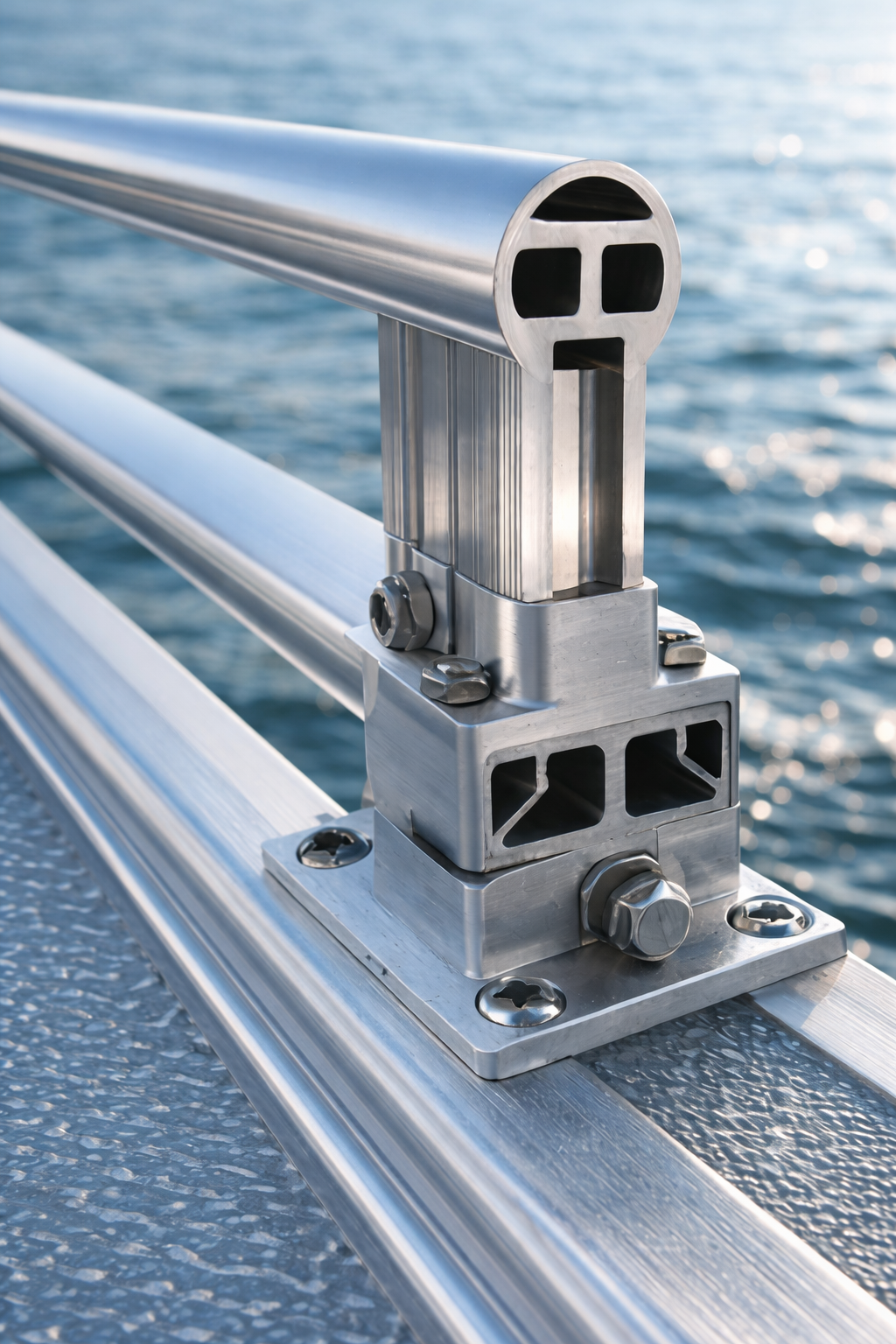
Marine & Recreational Applications
Dajcor Aluminum supports marine and recreational product manufacturers with corrosion-resistant aluminum extrusion solutions built for outdoor performance and durability.
Salt water is the hardest environment aluminum is routinely asked to work in, and recreational products get inspected closely by the people who buy them. Both the corrosion performance and the finish have to hold.
Common applications we support
Where our profiles typically end up in this market.
Marine railing systems
Railing and handrail sections for boats, docks and waterfront structures.
Docking systems
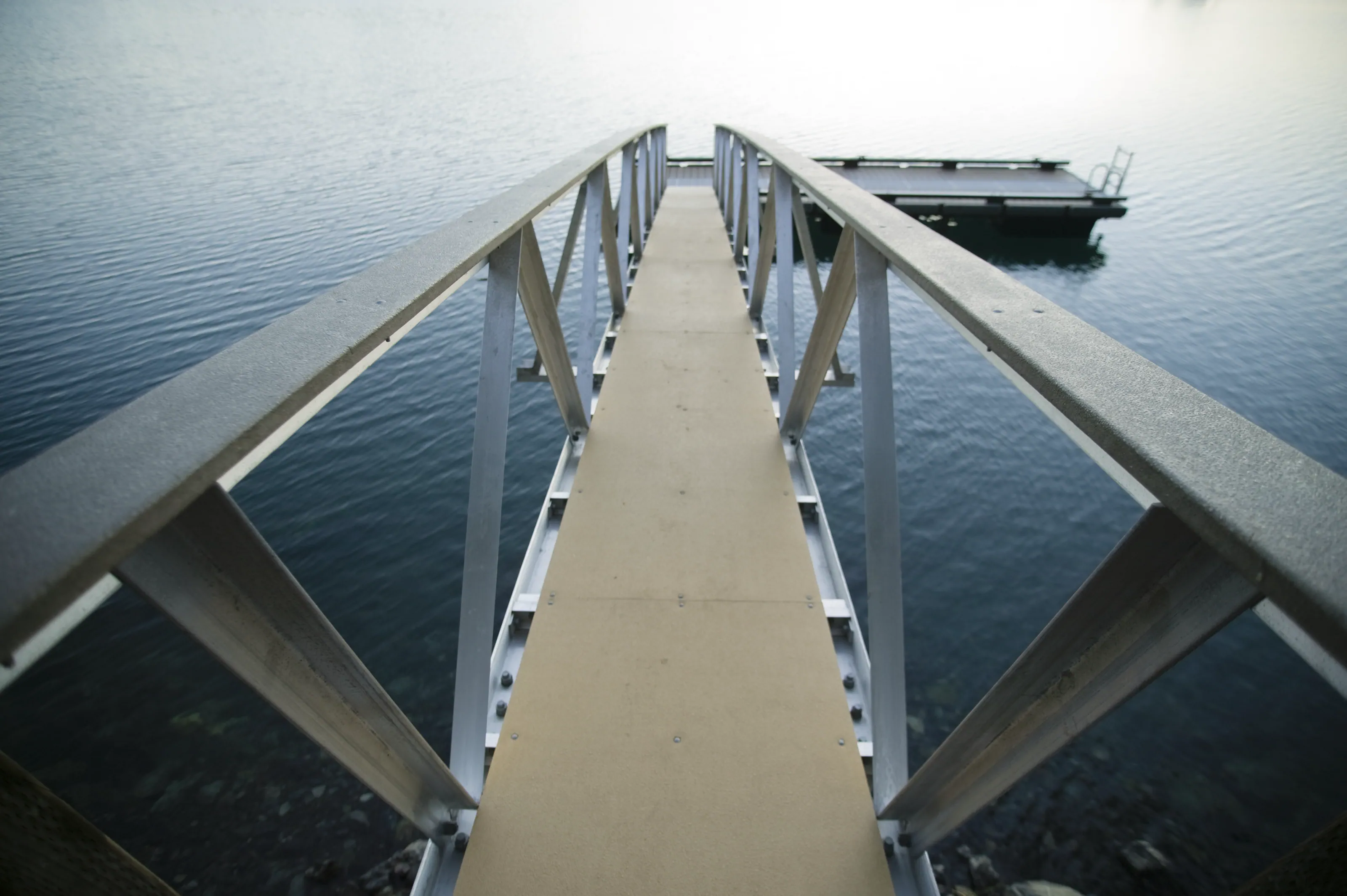
Dock, gangway and mooring profiles built for constant immersion and handling.
Pontoon structural components
Structural sections and framing for pontoon decks and superstructures.
RV framing systems
Framing and trim systems for recreational vehicles, where weight comes off towing capacity.
Trailer components
Trailer framing, rails and deck sections finished for outdoor service.
Outdoor equipment structures
Outdoor furniture, seating and equipment structures that stay outside year-round.
Corrosion resistance that is part of the metal
Aluminum forms its own oxide layer, and anodizing thickens that layer into a hard, integral surface. Unlike a coating, it cannot chip off an edge and expose bare metal underneath — which is why it holds up on railings, dock hardware and trailer components that are handled constantly.
For recreational products the same finish also has to look right. Our anodize lines run clear satin and etched finishes, electrolytic colour and chemically bright work up to 27 ft, so a long railing section can be finished in one piece instead of joined from several.
Anodizing cannot chip off an edge, because it is not sitting on top of the metal.
Materials and finishes
Profiles for every industry we serve are extruded from 6000-series alloys and finished in-house. The right combination depends on the loads, the environment and how visible the part is.
- 6063 and 6060
- General-purpose and detailed sections with excellent surface quality — the usual choice where the part is seen.
- 6061 and 6082
- Higher-strength structural alloys for load-bearing and safety-critical sections.
- 6005 / 6005A and 6463
- Structural sections needing more strength than 6063, and bright architectural trim.
- Anodized finishes
- Clear satin and etched, electrolytic colour and chemically bright, up to 27 ft in length.
- Painted finishes
- Durable indoor and outdoor coatings with consistent colour matching across runs.
- Mechanical finishes
- Buffing, brushing and deburring where a specific surface texture is required.
Key manufacturing capabilities
Dajcor Aluminum delivers engineered aluminum extrusion solutions backed by technical expertise, responsive service, and dependable North American manufacturing capabilities.
- Custom aluminum extrusions in 6000-series alloys
- Precision CNC machining and fabrication
- In-house anodizing and painted finishes
- Extrusion lengths up to approximately 28 feet
- Prototype through production manufacturing support
- Canadian and U.S. manufacturing capabilities
Key advantages
Capabilities behind this work
The in-house processes this market draws on most.
Common questions
Answers to the questions that come up most often at the quoting stage.
Aluminum extrusions can be finished in a variety of ways to improve durability, corrosion resistance, and appearance.
Common finishing options include:
- Mill finish for applications where the natural aluminum surface is acceptable
- Anodizing for enhanced corrosion resistance and decorative finishes
- Powder coating for durable colored coatings
- Brushed or polished finishes for aesthetic applications
The appropriate finishing process depends on the application, environmental conditions, and performance requirements. Our team works with customers to determine the best finishing option for their extrusion profile.
Dajcor Aluminum primarily extrudes alloys from the 6000 series, which are widely used for structural and industrial applications due to their excellent strength, corrosion resistance, and machinability.
Common extrusion alloys include:
- 6063 – Widely used for architectural and general-purpose applications with excellent surface finish
- 6463 – An architectural alloy that provides enhanced surface finish and anodizing quality
- 6061 – A higher-strength alloy commonly used in structural and industrial components
- 6082 – A strong structural alloy often used where higher mechanical strength is required
- 6005 / 6005A – Suitable for structural applications requiring higher strength than 6063
- 6060 – An alloy commonly used for profiles requiring good extrudability and surface quality
Our team works closely with customers to select the most appropriate alloy based on the application’s strength requirements, finishing needs, and fabrication processes.
If your project requires a specific alloy or performance characteristic, our engineering team can help determine the best material for your extrusion profile.
Lead times for custom aluminum extrusions can vary depending on factors such as profile complexity, die production, finishing requirements, and order volume.
For mill-finish extrusions using existing tooling, typical lead times are approximately two weeks, although this may fluctuate depending on production scheduling and seasonal demand.
New projects that require die manufacturing, sampling, or additional finishing processes may require additional time. Our team works closely with customers during the quoting and design phase to establish realistic timelines and ensure efficient production scheduling.
Working on a marine application?
Share what you’re building and your environment requirements. We’ll help you define the right extrusion approach.
Get in touch